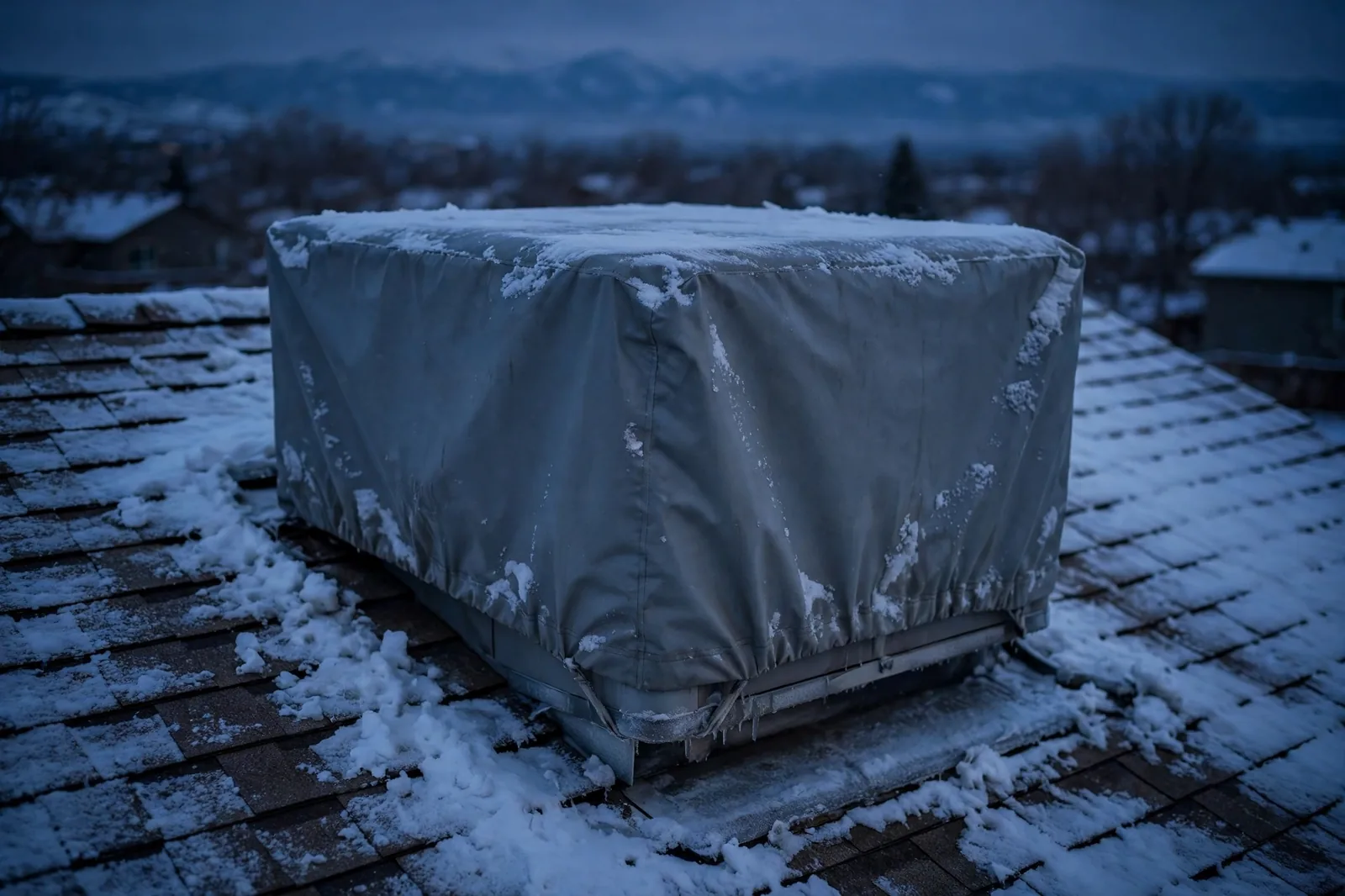
SWAMP COOLER WINTERIZING • MIDVALE, UTAH
Swamp Cooler Winterizing Checklist for Midvale Homes
To winterize a swamp cooler in Midvale, shut off its water supply, drain the reservoir and water line, unplug the pump and motor, clean the pan, and cover the unit, ideally before the first hard freeze in early to mid-October. Skipping it can crack lines and pans and leak into your ceiling.
When should Midvale homeowners winterize a swamp cooler?
Before the first hard freeze, usually by mid-October in the Salt Lake Valley: shut off the water line, drain the pan, and cover the cooler.
Swamp coolers are common on Midvale rooftops, especially on older ramblers and bungalows near Historic Main Street, Center Street and East Midvale, and on many 1960s to 1980s homes around Hillcrest and Midvale City Park. They work well in Utah's dry summers, but they run on a live water line. Once nights drop below freezing, any water left in the line, the float valve or the reservoir pan can freeze, expand and crack. The leak doesn't show up until the next warm afternoon, when the ice melts and water runs onto the roof or down the duct into the house.
Why Winterizing Matters
A cooler that isn't winterized can cause problems all winter long:
- Cracked water lines leak onto the roof deck every time the ice melts.
- Cracked reservoir pans let water pool under the cooler.
- Open ducts let cold air into the house and warm, moist indoor air up into the duct, where it condenses and drips.
- Snow and ice collect inside an uncovered cooler and melt into the duct.
- Damaged parts mean repairs before you can run it next summer.
The result is often a stain around the ceiling vent, wet attic insulation and sometimes a sagging ceiling, discovered weeks after the damage started.
Step-by-Step Swamp Cooler Shutdown
Work safely: only go on the roof if you're comfortable doing so, wear shoes with good grip, and don't work on a wet or icy roof. If you aren't sure, hire an HVAC company for this job.
- Turn off the power. Switch the cooler off at the thermostat or wall control, then unplug it or turn off its breaker.
- Shut off the water supply. Find the small valve on the water line that feeds the cooler. It's often in the attic, basement, utility room or on the line where it leaves the house. Turn it fully off.
- Drain the water line. Disconnect the line at the cooler or open the drain fitting so water left in the line runs out. A line that still holds water can freeze and split.
- Drain the reservoir. Open the drain plug or overflow in the bottom pan and let all the water out.
- Clean the pan. Scrub out scale, sediment and debris. Hard water leaves mineral buildup that makes float valves stick next season.
- Check the float valve. Look for scale or cracks so you can replace it before spring.
- Check the pads. Replace them now or note that they'll need replacing in spring.
- Close the vent inside. Close the ceiling vent or install an interior vent cover to keep warm air from rising into the duct.
- Cover the cooler. Use a fitted cooler cover to keep out snow, rain and wind.
- Note the date. Write down when you did it, for your own records.
Swamp Cooler Leak Signs to Catch Early
Whether it's summer or winter, watch for these signs that water is getting where it shouldn't:
- A brown or yellow ring around the ceiling vent.
- Bubbling, peeling or cracked paint on the ceiling near the vent or along the duct path.
- Water dripping from the vent grille.
- A musty smell when the cooler runs, or when you open the vent.
- Soft or sagging drywall in the room under the cooler.
- Water running off the roof or down the gutter on a dry day.
- Rust streaks on the outside of the cooler cabinet.
If you see any of these, turn the cooler off, shut its water valve, and check the attic if you can do so safely.
What Happens When You Skip It
A common Midvale call goes like this: the cooler wasn't shut off before an early October freeze, the line cracked overnight, and the next sunny afternoon water started running across the roof deck and into the attic. Because the cooler wasn't running, nobody checked it. A week or two later, a stain shows up on the hallway ceiling. By then, blown-in insulation is soaked, the drywall is soft, and the roof sheathing may be growing mold.
At that point, the fix usually includes removing wet insulation, drying the attic and ceiling, treating any mold, and replacing ceiling drywall. Swamp Cooler Leak Water Damage
Spring Start-Up Checklist
When warm weather returns, usually in May:
- Remove the cooler cover.
- Clean the pan again and check for cracks.
- Install new pads if needed.
- Check and adjust the float valve so it shuts off well below the overflow.
- Reconnect the water line and turn the supply valve back on slowly.
- Watch the cooler fill and make sure the float stops the water.
- Check the line and fittings for drips.
- Open the ceiling vent and run the cooler while you watch for leaks.
A Midvale Swamp Cooler Calendar
| Month | What to do |
|---|---|
| May | Start-up: cover off, clean, new pads, reconnect water, test the float |
| June to September | Check monthly for overflow, stains and musty smells |
| Early to mid-October | Shutdown: power off, water off, drain, clean, cover |
| November to April | Leave it covered; check the ceiling vent area for stains after storms |
Hard Water and Your Cooler
Midvale's water, like most water in the Salt Lake Valley, carries a lot of dissolved minerals. In a swamp cooler, the water evaporates and the minerals stay behind as scale on the pan, pads and float valve. Scale is the main reason float valves stick open and overflow. Cleaning the pan twice a year, replacing pads regularly and making sure the bleed-off line works all help keep scale under control.
Swamp Cooler or Central Air Condensate?
If your home has central air instead of a swamp cooler, ceiling leaks can still happen from a clogged condensate line or drain pan at the indoor coil. Those leaks happen during summer use, not after freezing. If you have a ceiling stain and aren't sure which system caused it, the location usually tells you: under the cooler vent or its duct for a swamp cooler, near the furnace or attic air handler for central air. Ceiling Water Damage
Side-Mount and Window Coolers
Not every cooler sits on the roof. Side-mounted and window coolers need the same steps: shut off the water, drain the line and pan, unplug the unit and cover it. These coolers leak differently when they fail. Water runs down the outside wall, soaks the siding and sill, and can collect in a nearby window well or along the foundation. Inside, it shows up as a wet carpet edge or stained drywall below the window or wall opening. Seal the wall or window opening for winter so cold air and moisture stay out.
What a Cooler Leak Does to Your Attic
Attics are where most swamp cooler damage hides. When water leaks onto the roof deck or runs down the duct:
- Blown-in insulation soaks up water, packs down and gets heavy enough to push on the ceiling drywall.
- Roof sheathing and rafters stay damp, which invites mold and rot.
- Ceiling drywall softens from above and can sag or come down.
- The duct itself can rust or collect standing water.
Wet insulation usually has to be removed, the attic dried and new insulation added once everything reads dry. That's why catching a leak early, or preventing it with a proper shutdown, saves so much trouble. Mold Remediation
Swamp Cooler Winterizing FAQ
Do I need to winterize a swamp cooler every year?
Yes. Water left in the system will freeze during a Salt Lake Valley winter.
Can I leave water in the line if the valve is off?
No. Water still in the line between the valve and the cooler can freeze and split it. Drain it.
Is a cooler cover really necessary?
It keeps snow, rain and wind out of the cooler and duct, which cuts down on leaks and drafts all winter.
What if I already see a stain on my ceiling?
Shut off the cooler's water and power, then have the ceiling and attic checked for wet insulation and mold.
Can I winterize a cooler myself?
Many homeowners do, but roof work can be dangerous. If you're not comfortable on the roof, hire an HVAC company.
Stain Around Your Ceiling Vent?
If your swamp cooler has already leaked into the attic or ceiling, call (385) 337-3560. A crew is dispatched immediately to dry the attic, remove wet insulation and repair the ceiling before the damage spreads.