MOLD REMEDIATION • MIDVALE, UTAH
Professional Mold Remediation in Midvale, UT 84047
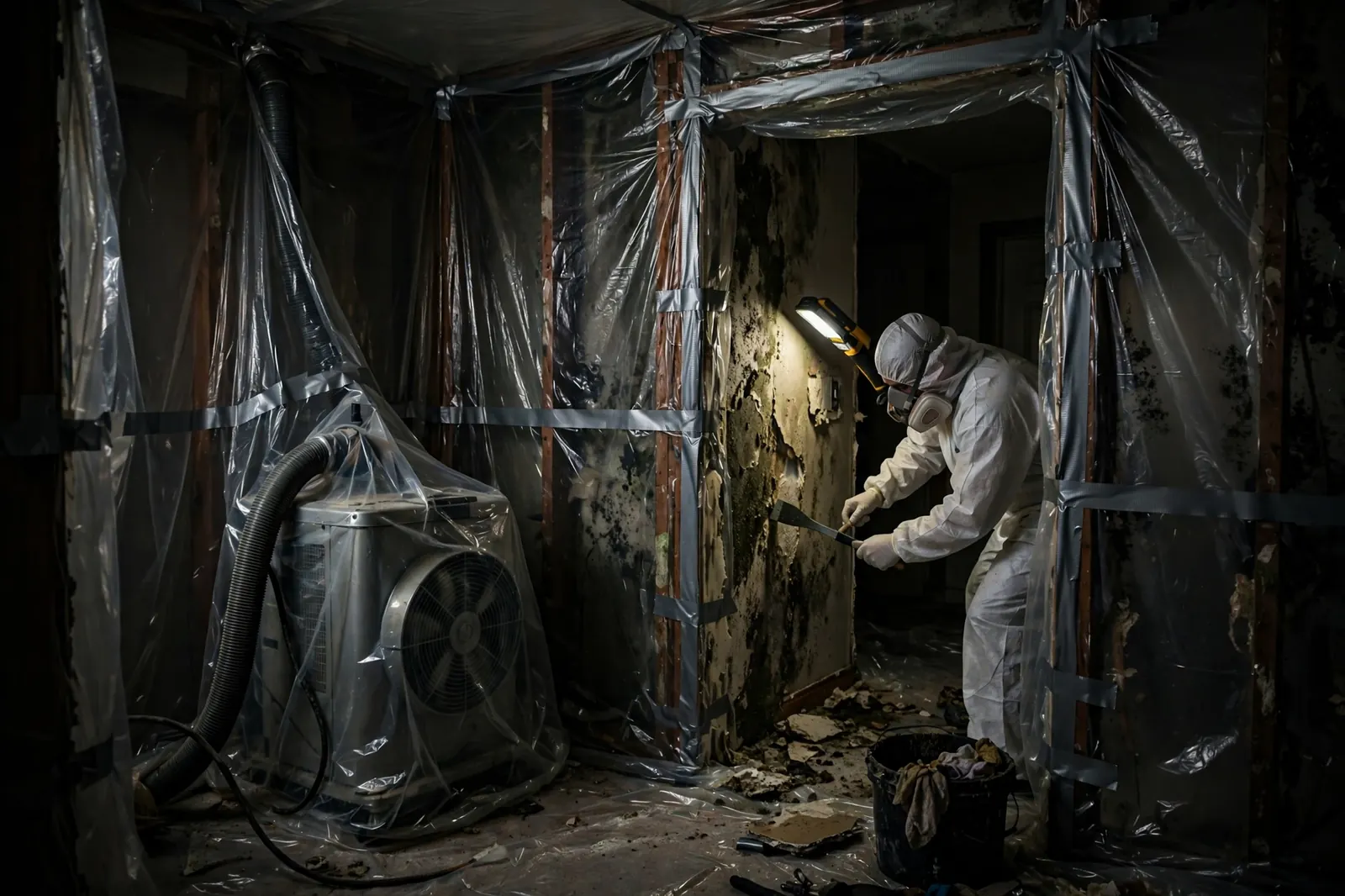
Mold after a leak isn't a cleaning problem; it's a moisture problem that shows up as spots, stains and that musty smell you can't air out. Our mold remediation Midvale UT crew is dispatched immediately to find the moisture behind it, seal off the area so spores don't spread, remove mold at the source and dry the space so it doesn't come back.
Containment First · HEPA Air Scrubbing · Source Removal, Not Cover-Ups · Moisture Fixed First
Can mold grow in Midvale homes when Utah air is so dry?
Yes. Utah's outdoor air is dry, but a wet wall cavity or finished basement stays humid inside, and mold can start on wet drywall within 24 to 48 hours.
The dry air outside doesn't reach the inside of a wet wall. When water soaks drywall, insulation, carpet pad or wood, the space right around that material stays damp for days or weeks, even if the room feels dry. Mold spores are already present in every home. All they need is moisture, something to eat, like the paper on drywall or the dust in carpet, and time. Finished basements, wall cavities behind leaking pipes, attics under swamp coolers and crawl spaces give them all three. That's why most mold calls in Midvale follow a leak that was dried too slowly, or never found.
Signs You May Have Mold
- A musty basement smell that comes back after cleaning or airing out.
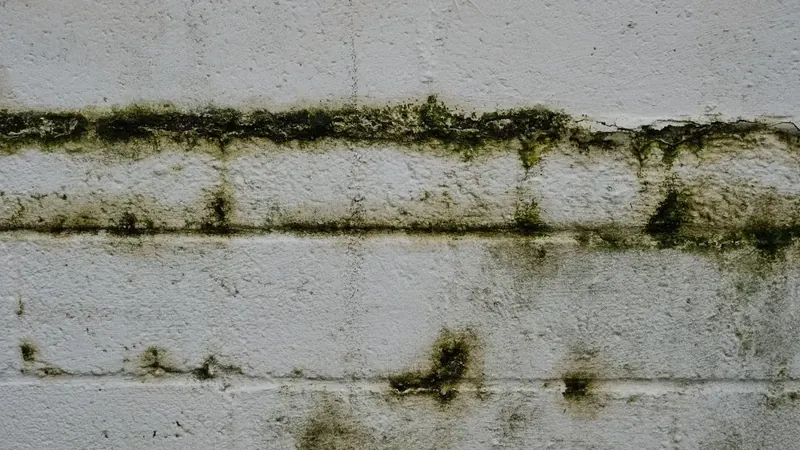
- Black, green, gray or white spots on drywall, baseboards, ceilings or wood.
- Paint that bubbles, peels or looks stained.
- Warped or soft drywall, especially near the floor or under windows.
- A past leak that was never fully dried.
- Allergy-like symptoms that ease when you leave the house.
Where Mold Hides in Midvale Homes
Finished Basements
Wood paneling, drywall and carpet over cold concrete trap moisture from leaks, groundwater and humidity. Mold often grows on the back side of paneling and under carpet pad, out of sight. Basement Flooding Cleanup
Behind Walls
A slow leak from a supply line, toilet or shower soaks the inside of the wall long before the outside shows it. Black mold behind drywall is often found only when the wall is opened. Water Leak Detection
Attics
Swamp cooler overflows, roof leaks, ice dams and bathroom fans venting into the attic all wet the roof deck and insulation. Swamp Cooler Leak Water Damage
Crawl Spaces
Dirt floors, plumbing leaks and groundwater keep crawl spaces damp, especially in older homes near Historic Main Street. Crawl Space Water Damage
Under Sinks and Behind Appliances
Slow drips under kitchen and bathroom sinks, behind fridges and under dishwashers feed mold in cabinet bases and subfloors.
Window Areas
Window well leaks and condensation on cold windows in winter wet sills, frames and the drywall below.
Musty Basement Smell: Mold or Just Damp?
A musty basement smell is one of the most common reasons people call. Sometimes it's just damp air from a basement that runs humid. Often it's mold growing where you can't see it, giving off the gases that cause the smell. The way to know is to check: moisture meters and thermal imaging show where materials are wet, and a visual check behind baseboards, under carpet edges and inside cabinets usually finds the source. If materials are dry and there's no growth, a dehumidifier may be enough. If they're wet, the moisture has to be fixed before anything else.
Mold Removal Midvale: Our Remediation Process
Good mold removal Midvale homes need follows the IICRC S520 approach, focused on removing mold and fixing moisture rather than spraying and covering.
- Find the moisture. We locate the water source and make sure it's fixed, or the mold returns.
- Contain the area. Plastic sheeting seals the work area, and negative air machines keep spores from drifting into the rest of the house.
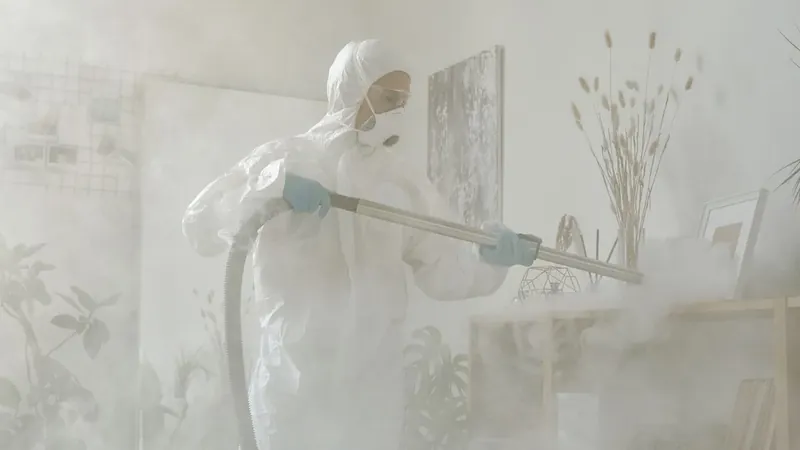
- Filter the air. HEPA mold containment uses HEPA air scrubbers that run throughout the job to capture spores.
- Remove moldy materials. Drywall, insulation, carpet pad and other porous materials with growth are cut out and bagged inside the containment.
- Clean what stays. Framing, concrete and hard surfaces are HEPA vacuumed and cleaned to remove mold.
- Treat and dry. Surfaces are treated with antimicrobial products, and the area is dried until readings match unaffected areas.
- Final check. The area is inspected for visible growth and moisture before containment comes down. Independent air testing is available if you want it.
- Rebuild. Drywall, insulation and finishes go back in. Water Damage Repair
Why Bleach and Paint Don't Fix Mold
Bleach can lighten mold stains on hard surfaces, but it doesn't reach roots growing inside drywall, wood or carpet, and its water content can feed regrowth. Painting over mold hides it while it keeps growing behind the paint. Removing the moldy material and fixing the moisture is the only lasting fix.
Mold Inspection After Water Damage Midvale
A mold inspection after water damage Midvale homeowners ask for usually makes sense when:
- A leak was found days or weeks after it started.
- You smell mustiness but see nothing.
- Water reached inside walls, ceilings or crawl spaces.
- You're buying or selling a home with a history of leaks.
- Someone in the home has asthma, allergies or a weak immune system.
The inspection uses moisture readings, thermal imaging and a visual check of likely spots. If you want lab confirmation, independent air or surface sampling can be arranged.
Utah Has No State Mold License: What to Ask
Utah doesn't license mold remediation companies at the state level, so the standard a company follows matters more than any license number. Before hiring anyone, ask:
- Do you follow the IICRC S520 standard for mold remediation?
- Will you set up containment and negative air?
- Will you fix or confirm the moisture source first?
- What will be removed, and what will be cleaned?
- Can independent testing be done after the work?
Odor Removal After Mold
Once moldy materials are removed and the area is dry, most odor goes with them. HEPA air scrubbing during the job removes airborne particles, and remaining odor in framing or concrete can be treated after cleaning. A smell that returns weeks later means moisture is coming back, and the area should be rechecked.
Mold in Midvale Rentals: Landlords and Tenants
More than half of Midvale homes are rented, and mold in rentals raises extra questions. Tenants often notice the smell or spots first but may not know where the moisture comes from. Landlords need to know whether it's from a leak, a building problem or everyday humidity. Our inspection notes the moisture source and where the growth is, which helps both sides understand what happened. During remediation, containment keeps the work area separate so tenants can usually stay in the rest of the unit. In apartment buildings and condos, we check neighboring units on shared walls and ceilings, because the moisture source is often next door. Condo & Apartment Water Damage
Who Should Stay Away From Moldy Areas
Most healthy adults are fine in a home with small mold problems, but some people should avoid moldy areas and the work zone during remediation:
- Babies and young children.
- Older adults.
- People with asthma, allergies or other breathing problems.
- People with weakened immune systems.
- Pregnant women, as a precaution.
If anyone in the home has symptoms they think are linked to mold, they should talk to their doctor.
Mold After a Midvale Water Event: Typical Timeline
| Time after water | What typically happens |
|---|---|
| First 24 hours | Materials soak up water; mold spores start to settle in |
| 24 to 48 hours | Mold can begin growing on wet drywall, pad and wood |
| 3 to 7 days | Growth becomes visible in some areas; musty odors start |
| 1 to 3 weeks | Growth spreads inside walls, under flooring and in attics |
| Months | Materials can rot and odors become hard to remove |
That's why fast drying after any leak is the best mold prevention there is. Emergency Water Extraction
What Mold Remediation Midvale UT Costs
General ranges for planning:
- Small area, such as under one sink or a short wall section: about $1,500 to $2,500
- One room or a section of finished basement: about $2,500 to $4,500
- Larger basement areas, attics or crawl spaces: about $4,500 to $6,000 or more
Cost depends on how much area is affected, what materials must be removed, access, containment needs and rebuild work.
Preventing Mold After a Leak
- Start drying within the first 24 to 48 hours after any leak.
- Use moisture readings, not touch, to decide when walls and floors are dry.
- Keep basement humidity below about 50% with a dehumidifier if it runs damp.
- Fix slow drips under sinks and around toilets quickly.
- Vent bathroom fans outside, not into the attic.
- Winterize swamp coolers and check them each spring.
Mold Remediation FAQ
Is black mold dangerous?
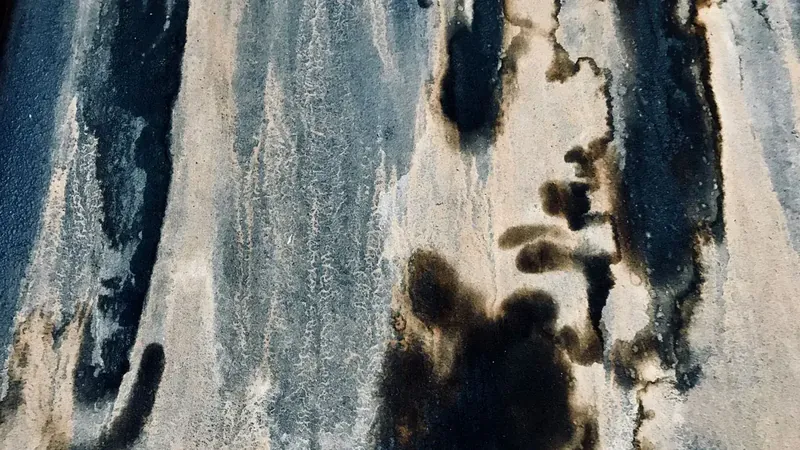
Any mold can cause problems for sensitive people, whatever its color. Color alone doesn't tell you the type. Large or hidden growth should be removed properly.
Can I remove mold myself?
Very small spots on hard surfaces can be cleaned with gloves and a mask. Anything larger, hidden in walls or recurring needs containment and proper removal.
Will mold come back after remediation?
Not if the moisture is fixed. Mold returns when the water source isn't.
Do I need to leave during remediation?
Usually not. Containment keeps the rest of the home separate, though sensitive people may prefer to stay elsewhere.
Does insurance cover mold?
Mold from a sudden, covered water event may be covered, often up to a limit. Mold from long-term leaks or humidity usually isn't.
Mold in Your Midvale Home? Fix the Cause, Not Just the Spot
Mold keeps growing as long as there's moisture. For mold remediation Midvale UT homeowners and landlords can reach any hour, call now. Whether you need mold removal Midvale basements are hiding or a mold inspection after water damage Midvale homes just went through, a crew is dispatched immediately.