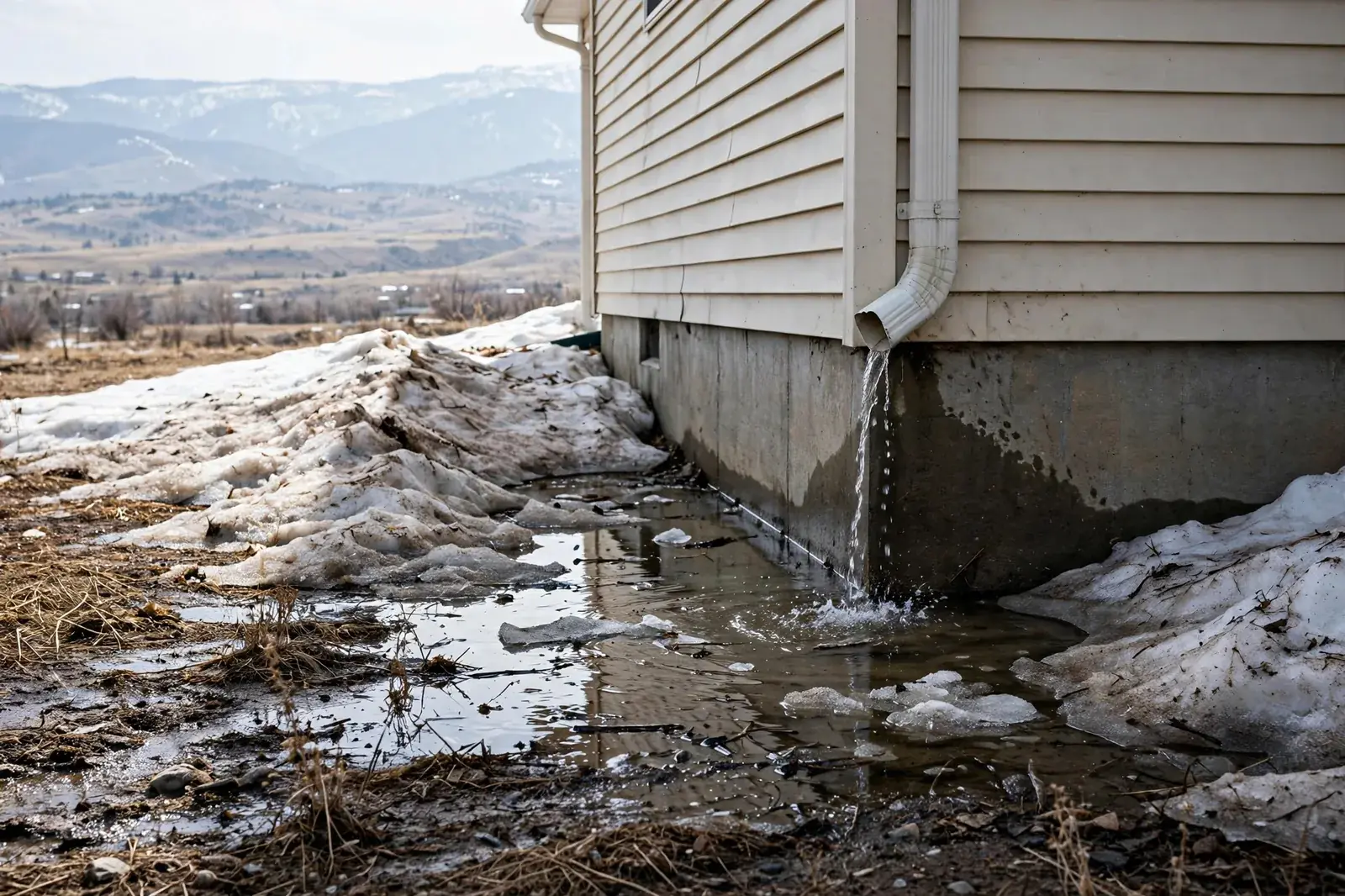
SPRING BASEMENT FLOODING • MIDVALE, UTAH
Water Coming Up Through Your Basement Floor? Spring Snowmelt in Midvale
Water coming up through a basement floor in spring, with no broken pipe, is usually groundwater. As Wasatch snowmelt soaks the valley's clay soil, pressure builds under and around the foundation and pushes water through floor cracks, wall joints and window wells, even on dry, sunny days.
Why does my Midvale basement flood in spring without rain?
Melting mountain snow saturates the valley's clay soil and lifts groundwater, which pushes up through floor cracks and window wells even on dry, sunny days.
Every spring, the snowpack in the Wasatch melts and runs down into the Salt Lake Valley through creeks, canals and the ground itself. Midvale sits on the valley floor, between the mountains to the east and the Jordan River on its west edge, on fine, clay-rich soil. Clay holds water and swells. When the ground around your foundation is full, water looks for the easiest way into the low point of the house, which is the basement. That's why a basement can take on water on a warm, sunny afternoon in April or May, days after the last storm.
How to Tell Groundwater From a Leak
| What you see | More likely groundwater | More likely a leak |
|---|---|---|
| Where the water is | Along the floor-wall joint, through slab cracks, across a wide area | Near one fixture, pipe or appliance |
| When it shows up | Spring runoff, after long watering, weeks after storms | Any time, often suddenly |
| How it spreads | Slowly, wide and shallow | Can be fast and from one direction |
| Water meter | Doesn't move with everything off | Keeps moving with everything off |
| Water appearance | Often clear, may carry silt | Clean from supply lines, or gray from drains |
If the meter moves with everything off, look for a plumbing leak first. If it doesn't, and water is coming from the floor or wall joints, groundwater is the likely cause.
Where Snowmelt Gets Into Midvale Basements
- The floor-wall joint: the seam where the slab meets the foundation wall is the most common entry point.
- Slab cracks: hairline and settlement cracks let water rise under pressure.
- Wall cracks and tie holes: small openings in poured concrete or block walls.
- Pipe penetrations: where water, sewer or gas lines pass through the wall.
- Window wells: meltwater and runoff fill the well and pour in around the window. Window Well Flooding
- Floor drains: in some cases, saturated ground pushes water up through the floor drain.
What to Do in the First Hour
- Move furniture, boxes, electronics and rugs off the floor.
- Turn off power to the basement if water is near outlets and the panel is safe to reach.
- Check the water meter with everything off to rule out a plumbing leak.
- Look outside: point downspouts away from the house, turn off sprinklers, and lower water in window wells from outside if safe.
- Take photos and video of where the water is coming in.
- Pull back wet area rugs; leave wall-to-wall carpet in place until a crew can lift it properly.
- Call (385) 337-3560 so water removal and drying can start.
Why Seepage Needs More Than a Shop Vac
Groundwater seepage is usually wide and shallow. It soaks carpet pad across large areas, wicks up the bottom of drywall and paneling, and gets under laminate and vinyl plank. A shop vac picks up the surface water, but the pad, the bottom of the walls and the floor underneath stay wet. In Midvale's cool basements, that moisture can sit for weeks, which leads to musty smells and mold. Proper drying includes extraction from the pad, moisture mapping of walls and floors, dehumidifiers and air movers, and daily readings until everything matches dry areas. Basement Flooding Cleanup
Which Midvale Basements Seep Most
- Lower ground on the west side, closer to the Jordan River, where the water table sits higher in wet springs.
- Older homes near Historic Main Street and Center Street, with older foundations, partial basements and crawl spaces.
- Finished basements in Hillcrest and East Midvale ramblers and split-levels, where paneling and carpet over concrete hide seepage.
- Homes where yards slope toward the house, or where soil has settled next to the foundation.
- Homes with downspouts that empty right beside the walls.
Fixes That Reduce Spring Seepage
These are usually done after the basement is dry, by a landscaper, handyman or waterproofing contractor:
| Fix | What it does |
|---|---|
| Extend downspouts several feet from the house | Keeps roof water away from the foundation |
| Regrade soil to slope away from the walls | Sends surface water away instead of toward the house |
| Clear or upgrade window well drains and add covers | Stops wells from filling and spilling inside |
| Seal floor and wall cracks | Closes small entry points |
| Interior drain system and sump pump | Collects groundwater under the slab and pumps it out |
| Adjust sprinklers | Stops watering against the foundation |
The first three are inexpensive and often make the biggest difference. A sump system is the bigger fix for basements that seep every year.
Sandbags and Spring Prep
In heavy runoff years, Salt Lake County and local cities often make sandbags available. Locations change from year to year, so check county and city announcements when high runoff is forecast. Sandbags are most useful at window wells, garage doors and outside basement stairs. They're less useful against groundwater, which comes up from below. Midvale Water & Sewer Emergency Contacts
Does Insurance Cover Spring Seepage?
This is the hard part. Most homeowners policies exclude damage from groundwater, surface water and seepage. Flood insurance covers some surface flooding but often has limits on basement contents and finishes. A sudden plumbing failure is usually covered, which is one reason to rule out a leak first. Policies vary, so check yours and talk to your agent before spring.
A Spring Checklist for Midvale Basements
A little prep in late winter can keep spring runoff outside where it belongs.
February to March:
- Clear leaves and debris from gutters, downspouts and window well gravel.
- Make sure every downspout empties several feet from the foundation.
- Install or check window well covers.
- Test your sump pump, if you have one, by pouring water into the pit.
- Move keepsakes, papers and electronics off basement floors and into plastic bins on shelves.
April to June (peak runoff):
- Walk the basement every few days, especially along outside walls and corners.
- Lift a corner of carpet near the walls to check for dampness underneath.
- Watch window wells after warm afternoons and storms.
- Hold off on heavy watering right next to the foundation.
Seepage and Mold: Why the Clock Matters
Seepage water is often clean, but it soaks into carpet pad, the bottom of drywall and paneling, and any cardboard boxes on the floor. Basements stay cool and dark, which slows drying and gives mold a chance to start within a couple of days. A musty smell weeks after the water seemed to stop usually means moisture is still trapped under flooring or inside the walls. Drying it properly the first time is the best way to avoid a mold problem later. Mold Remediation
What It Generally Costs
General ranges for planning in the Salt Lake area:
- Small area of seepage caught early: about $1,500 to $3,500
- Finished basement with wet carpet, pad and walls: about $2,500 to $9,000
Cost depends on how much area is wet, how long it sat, the flooring and wall finishes, and how many days of drying are needed. Waterproofing work outside is separate.
Spring Snowmelt FAQ
When is spring runoff season in Midvale?
Usually from about March through June, peaking when warm weather melts high-elevation snow quickly.
Will the water stop on its own?
Usually, once runoff slows and the soil drains. But the water already inside needs to be removed and dried to prevent mold.
Can I seal the floor from inside to stop it?
Sealing cracks helps with small seepage, but strong groundwater pressure often finds another way in. Drainage outside and a sump system work better for serious seepage.
Should I pull up my carpet?
Leave wall-to-wall carpet down until a crew can lift and dry it properly; pulling it yourself can tear the backing and make it harder to save.
Why does it happen every year?
The soil and drainage around your home haven't changed. Fixing grading, downspouts and window wells, or adding a sump system, breaks the cycle.
Water Coming Up Through Your Basement Floor?
Groundwater keeps soaking in until it's removed and the space is dried. Call (385) 337-3560 and a crew is dispatched immediately to pull out the water, dry your basement and show you exactly where it came in.