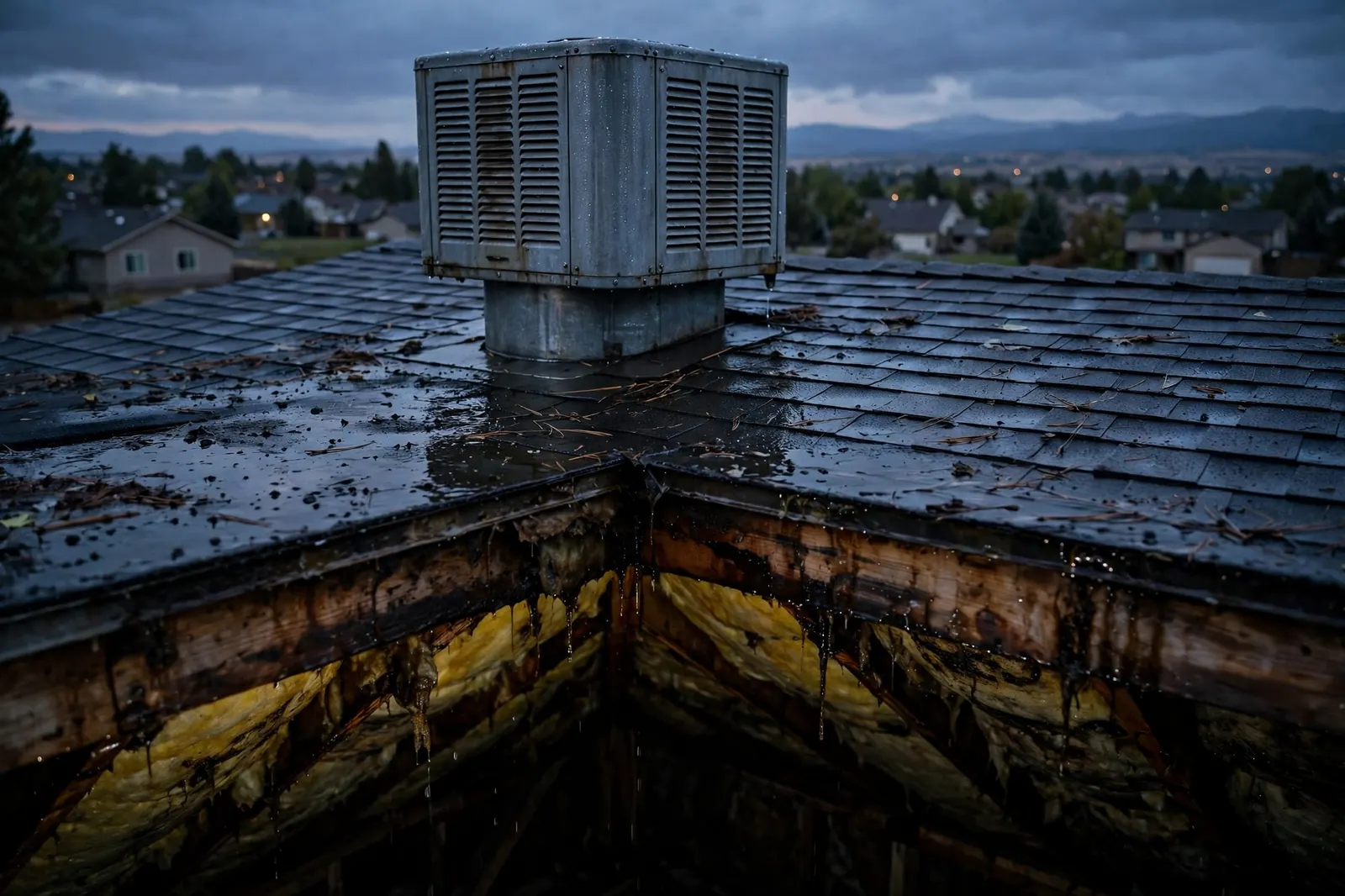
SWAMP COOLER LEAK DAMAGE • MIDVALE, UTAH
Fast Swamp Cooler Leak Water Damage Repair in Midvale, UT 84047
A swamp cooler leak rarely starts with a puddle. It starts on the roof, soaks the deck and attic insulation, and only shows up when a brown ring spreads across the ceiling or drywall starts to sag. Our swamp cooler leak water damage Midvale UT crew is dispatched immediately to dry the attic, insulation and ceiling before the damage turns into mold or a collapse.
24/7 Response · Attic & Ceiling Drying · Wet Insulation Removal · Moisture-Mapped Repairs
Why is my swamp cooler leaking through the ceiling in Midvale?
A stuck float valve, clogged drain pan, cracked reservoir, or a cooler that froze before winterizing can overflow onto the roof deck and soak attic insulation and ceiling drywall.
Evaporative coolers work well in Utah's dry summers, which is why so many Midvale roofs have one. But they run on a constant water supply. Fresh water fills a reservoir at the bottom of the cooler, a pump lifts it over the pads, and a float valve shuts the water off when the reservoir is full. When any part of that system fails, water overflows onto the roof or down the duct into the house. Because the cooler sits above the attic, water soaks insulation and the top of the drywall first, and you only see it when the ceiling below can't hold any more.
Swamp Cooler Leaking Through Ceiling Midvale: Where the Water Comes From
Every swamp cooler leaking through ceiling Midvale homeowners notice traces back to one of these parts.
| Part | What goes wrong | What you may see |
|---|---|---|
| Float valve | Sticks open from mineral scale, so water never shuts off | Constant overflow, water running off the roof |
| Reservoir pan | Rusts through or cracks | Stains on the ceiling under the cooler |
| Drain or bleed-off line | Clogs with scale, leaves or debris | Water backing up into the cooler and spilling over |
| Water supply line | Small copper or plastic line cracks or loosens | Slow drip that soaks the roof deck |
| Cooler pads | Clog and push water off the side | Wet roof around the cooler |
| Duct and roof curb | Flashing fails where the duct passes through the roof | Leaks at the ceiling vent or around it |
A float valve stuck open is the most common cause. Hard water builds scale on the float arm and valve seat until it can't close. Within a day, the cooler can send a large amount of water across the roof and into the attic.
Evaporative Cooler Leak Midvale: The Signs Before the Ceiling Fails
An evaporative cooler leak Midvale homes get usually gives warnings first:
- Water stains or rings around the ceiling vent where cool air comes in.
- Bubbling or peeling paint on the ceiling.
- A musty smell when the cooler runs.
- Water dripping from the vent grille.
- Soft or sagging drywall in the hallway or room under the cooler.
- Water running down the outside walls or gutters on dry days.
If you see any of these, shut the cooler off and close its water valve right away.
When a Cooler Freezes Before Winterizing
Midvale's first hard freeze often arrives in October. If the water line isn't shut off and the reservoir isn't drained before then, water inside the line or pan freezes, expands and cracks it. The leak starts on the next warm afternoon, and because the cooler isn't running, nobody is watching. This is one of the most common swamp cooler roof leak calls we see in fall and early winter.
Why Wet Attic Insulation Has to Come Out
Blown-in cellulose and fiberglass soak up water like a sponge. Wet insulation is heavy, and its weight can bring down a ceiling that is already soft. It also packs down and loses most of its insulating value, and it holds moisture against the drywall and framing for weeks. Wet blown-in insulation is usually removed with a vacuum system, the area is dried, and new insulation is added once readings confirm everything is dry.
How We Repair Swamp Cooler Leak Damage
- Stop the water. We confirm the cooler's water supply is off and the unit is not running.
- Make the ceiling safe. If drywall is sagging, we drain it in a controlled way and protect the room below.
- Map the moisture. Thermal imaging and moisture meters show how far water spread across the ceiling and attic.
- Remove wet insulation with vacuum extraction.
- Dry the attic and ceiling. Air movers and dehumidifiers dry the roof deck, joists and drywall.
- Treat for mold where wood or drywall stayed wet.
- Repair the ceiling. Damaged drywall is replaced, textured to match, primed and painted. Ceiling Water Damage
Repairing the cooler itself or the roof flashing is done by an HVAC or roofing contractor.
Which Midvale Homes Have Swamp Coolers
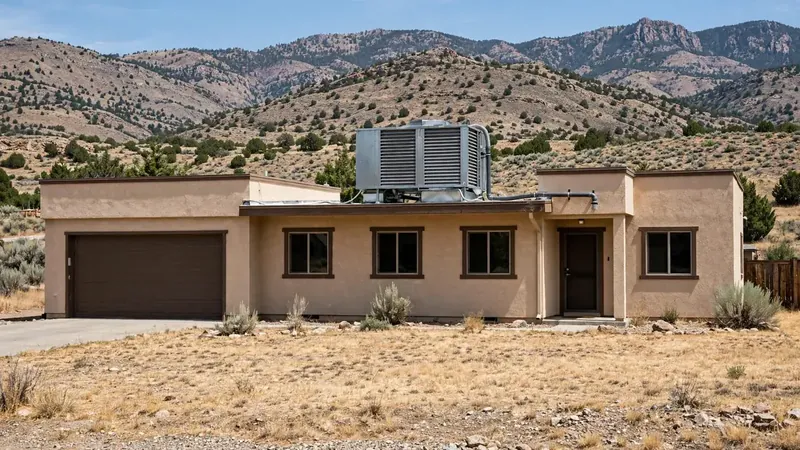
Rooftop coolers are most common on older ramblers and bungalows near Historic Main Street, Center Street and East Midvale, and on many 1960s to 1980s homes around Hillcrest and Midvale City Park. Some homes have a cooler mounted on the side of the house or in a window instead, which can leak down the outside wall and into the basement or a window well. Newer homes and townhomes in Bingham Junction and Jordan Bluffs mostly use central air, where condensate lines can cause similar ceiling leaks.
A Midvale Swamp Cooler Calendar
| Season | What to do | Leak risk |
|---|---|---|
| Spring (April to May) | Reconnect water, check float valve, drain line and pads | Leaks from parts damaged over winter |
| Summer (June to September) | Check for overflow and stains monthly | Stuck float valves, clogged pads and drains |
| Fall (by early October) | Shut off water, drain reservoir and line, cover the cooler | Freeze damage if skipped |
| Winter | Keep it covered and dry | Cracked lines and pans from freezing |
Side-Mount and Window Coolers
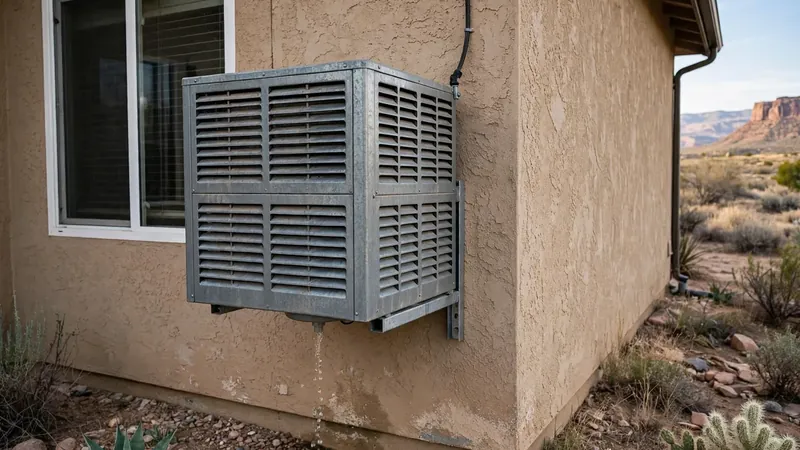
Not every Midvale cooler sits on the roof. Side-mounted and window units leak differently. Overflow runs down the outside wall, soaks the siding and sill plate, and can collect in a window well or along the foundation. Inside, water comes through the window frame or the wall opening and runs down to the floor. These leaks often show up as a wet carpet edge under the window or a basement stain directly below the cooler. The same drying process applies, but the focus moves from the attic to the wall cavity and floor below.
Swamp Cooler Leaks vs Central Air Condensate Leaks
Both can stain a ceiling, but they are different problems:
| Swamp cooler | Central air | |
|---|---|---|
| Where the water comes from | Fresh water supply feeding the cooler | Condensation pulled out of indoor air |
| Where the leak starts | Roof, reservoir, float valve or duct | Drain pan or condensate line at the indoor coil |
| How much water | Can be a lot, because the supply keeps running | Usually slower, but steady every time the AC runs |
| Typical location | Ceiling under the cooler vent or along its duct | Ceiling under an attic air handler or near the furnace |
If your home has central air and the leak is near the furnace or attic air handler, the condensate line is the more likely source. Either way, the wet ceiling and insulation get the same drying and repair.
What Adjusters Ask About Cooler Leaks
Insurance adjusters usually want to know when the leak started, whether the cooler was maintained, and whether the damage was sudden. Dated photos of the cooler, the attic and the ceiling, along with daily moisture readings, help answer those questions. Keep any receipts for spring start-up or fall winterizing service; they show the cooler was cared for.
What Swamp Cooler Leak Water Damage Midvale UT Repair Costs
General ranges for planning:
- Small ceiling stain, caught early: about $800 to $2,000
- Wet attic insulation and one room of ceiling: about $2,000 to $4,000
- Ceiling collapse or several rooms: often toward the higher end or more
Cost depends on how much water reached the attic, whether insulation must be removed, how much drywall is replaced and how long drying takes. Cooler and roof repairs are separate.
Swamp Cooler Overflow and Mold
Attics are dark, hot in summer and poorly ventilated, which is ideal for mold once wood and insulation get wet. A swamp cooler overflow that goes unnoticed for a week can leave mold on roof sheathing and ceiling joists. If you smell mustiness when the cooler runs or see dark spots around the ceiling vent, have the attic checked. Mold Remediation
Swamp Cooler Leak FAQ
Should I keep running my swamp cooler if it's leaking?
No. Turn it off and shut its water valve. Running it keeps sending water into the attic.
Will insurance cover swamp cooler water damage?
Sudden overflow damage is often covered. Damage from a long, slow leak or skipped maintenance may not be. Our photos and moisture logs help your adjuster decide.
Can I just paint over a swamp cooler stain?
Not until the area behind it is dry. Painting over wet drywall or insulation traps moisture and lets mold grow out of sight.
How long does attic and ceiling drying take?
Usually about 3 to 5 days, longer if the roof deck or joists were soaked.
When should I winterize my swamp cooler in Midvale?
Before the first hard freeze, usually by early to mid-October.
Swamp Cooler Leaking? Protect Your Ceiling Today
A ceiling soaked from above can give way without warning. For swamp cooler leak water damage Midvale UT homeowners can reach any hour, call now. Whether it's an evaporative cooler leak Midvale attics are hiding or a swamp cooler leaking through ceiling Midvale families can already see, a crew is dispatched immediately.