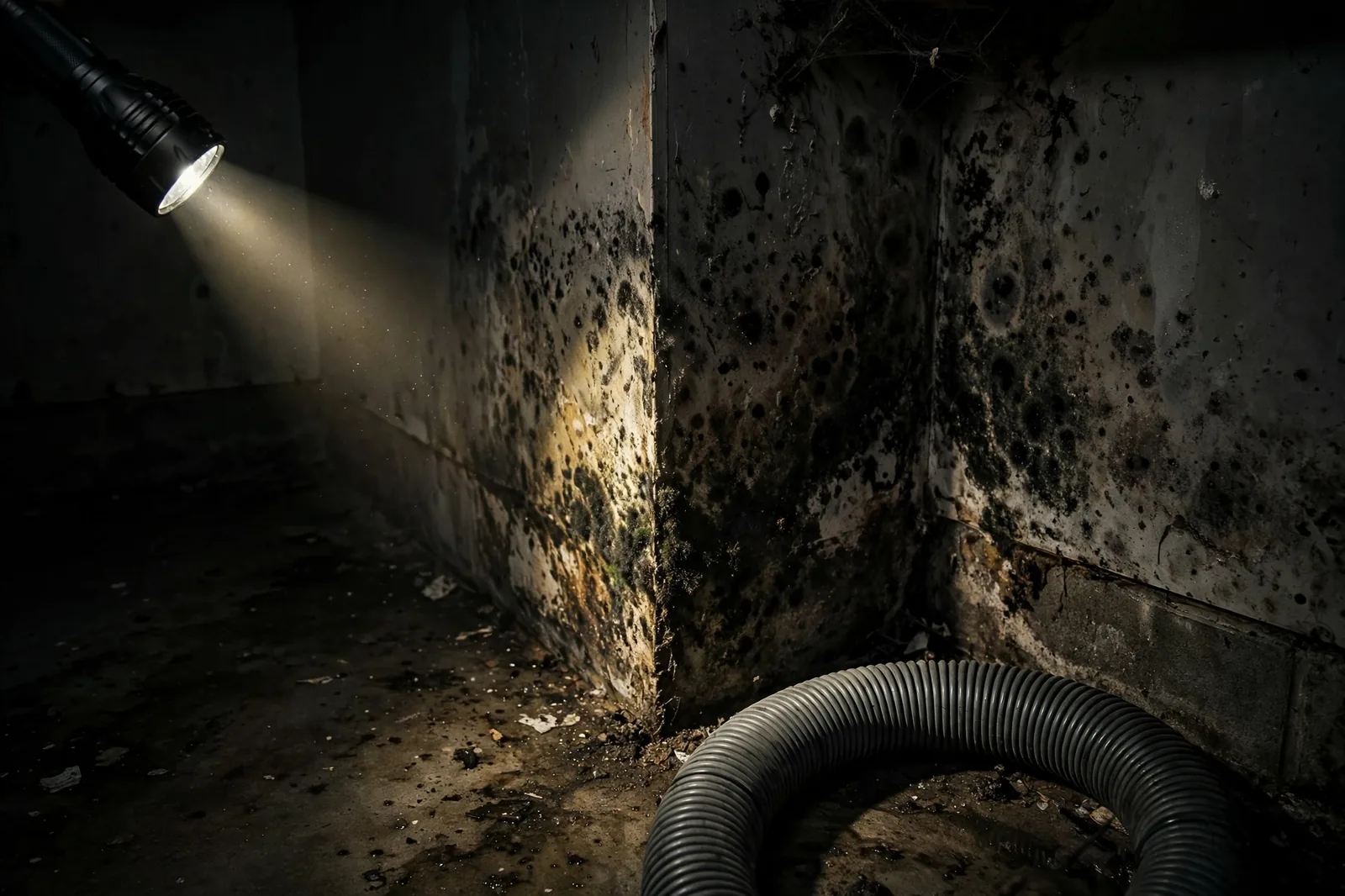
MOLD AFTER A LEAK • MIDVALE, UTAH
Utah Is Too Dry for Mold? Why Wet Drywall Still Molds in Midvale
Yes, mold can grow in Utah. The outdoor air is dry, but the inside of a wet wall, a soaked carpet pad or a damp basement is not. Mold can start growing on wet drywall within about 24 to 48 hours, so how fast a leak is dried matters far more than the climate outside.
Can mold grow in Utah if the air is so dry?
Yes. Outdoor air is dry, but a wet wall cavity or carpet pad holds moisture for days, which gives mold time to grow within 24 to 48 hours.
It's one of the most common things Midvale homeowners say after a leak: "It's Utah, it'll dry out on its own." The idea makes sense at first. Salt Lake Valley air is dry for much of the year, and a wet towel left outside dries quickly. But the inside of a wall isn't outside. Once water soaks into drywall, insulation, wood framing or carpet pad, it's trapped in a small, closed space where dry air can't reach it. That space stays damp for days or weeks, which is plenty of time for mold.
Outdoor Air vs Inside a Wet Wall
| Outdoor air in the Salt Lake Valley | Inside a wet wall cavity | |
|---|---|---|
| Moisture | Often dry | Damp for days or weeks |
| Air movement | Wind and sun | Almost none |
| Temperature | Swings day to night | Stays steady and mild |
| Food for mold | Little | Paper on drywall, wood, dust |
| Mold risk | Low | High |
Mold spores are already in every home, floating in the air and settling on surfaces. They don't need much: moisture, something to eat, and a little time. A wet wall cavity gives them all three.
How Fast Mold Grows After a Leak
| Time after water | What typically happens |
|---|---|
| First 24 hours | Drywall, pad and wood soak up water; spores settle |
| 24 to 48 hours | Mold can begin growing on wet paper-faced drywall and dust |
| 3 to 7 days | Growth may become visible in some areas; musty smells start |
| 1 to 3 weeks | Growth spreads inside walls, under flooring and in attics |
| Longer | Materials can rot, odors set in and cleanup gets larger |
This is why the first two days after a leak decide how much of a home needs to be removed later.
Why Fans and Open Windows Aren't Enough
Fans and open windows dry the surface you can see, but water inside walls, under flooring and in carpet pad stays put. A fan blowing across a wet wall can make the face of the drywall feel dry to the touch while the back stays soaked. In winter, opening windows lets in cold air that slows drying even more. And in Midvale's cold basements, concrete walls and floors stay cool, so moisture lingers longer than it would in a warm room.
Professional drying works differently:
- Moisture meters and thermal imaging find water you can't see.
- Dehumidifiers pull moisture out of the air so materials can release their water.
- Air movers push dry air across and into wet materials.
- Wall-cavity drying sends dry air inside walls through small holes behind baseboards.
- Daily readings show when materials match dry areas, so drying isn't stopped too early.
Where Mold Hides in Midvale Homes
- Finished basements: paneling and drywall over cold concrete in Hillcrest and East Midvale ramblers and split-levels. Basement Flooding Cleanup
- Behind bathroom and kitchen walls: slow leaks from supply lines, toilets and showers.
- Attics: under rooftop swamp coolers, around ice dams and above bathroom fans that vent into the attic.
- Crawl spaces: older homes near Historic Main Street with dirt floors and old pipes.
- Under sinks and behind appliances: dishwashers, fridges and water heaters.
- Around windows: window well leaks and winter condensation.
Signs Mold Has Already Started
- A musty or earthy smell that returns after cleaning.
- Spots on drywall, baseboards, ceilings or wood, in black, green, gray or white.
- Paint that bubbles, peels or stains.
- Soft, warped or swollen drywall.
- Allergy-like symptoms that ease when you leave the house.
If you notice any of these after a leak, the moisture needs to be found and fixed first, then the mold removed properly. Mold Remediation
Why Bleach and Paint Don't Fix It
Bleach can lighten mold stains on hard surfaces like tile, but it doesn't reach growth inside drywall, wood or carpet, and the water in it can feed regrowth. Painting over mold just hides it while it keeps growing behind the paint. Lasting fixes do two things: remove the moldy material and fix the moisture that caused it.
Utah Has No State Mold License
Utah doesn't license mold remediation companies at the state level. That makes the standard a company follows more important. The industry standard is IICRC S520. When you talk to anyone about mold, ask:
- Do you follow the IICRC S520 standard?
- Will you find and fix the moisture source first?
- Will you set up containment and negative air?
- What will be removed, and what will be cleaned?
- Can independent testing be done afterward?
How to Prevent Mold After Any Leak
- Stop the water fast. Know where your main shut-off is.
- Start drying within 24 to 48 hours. Don't wait to see if it dries on its own.
- Measure, don't guess. Use moisture readings to decide when things are dry.
- Remove soaked pad and insulation that can't be dried.
- Keep basements below about 50% humidity with a dehumidifier if they run damp.
- Fix small drips quickly under sinks, around toilets and at water heaters.
- Vent bathroom fans outside, not into the attic.
- Winterize swamp coolers before the first freeze.
The Cost of Waiting
A leak dried within the first day or two often means extraction, drying and a few small repairs. The same leak left for a week or two can mean opening walls, removing insulation and drywall, containment for mold removal and a much bigger rebuild. General ranges in the Salt Lake area show the difference: drying a room after a leak often runs about $1,000 to $4,500, while mold remediation for small to mid-sized areas often runs about $1,500 to $6,000, before any rebuild. Acting early is the cheapest option by far. Emergency Water Extraction
Mold Risk by Room in Midvale Homes
| Room or area | Why it's at risk | What to watch |
|---|---|---|
| Finished basement | Cool concrete, groundwater, water heaters nearby | Musty smell, stains at the bottom of walls, damp carpet edges |
| Bathroom | Daily steam, shower and toilet leaks | Spots on ceilings and grout, soft floors near the toilet |
| Kitchen | Dishwasher, fridge and sink lines | Swollen cabinet bases, lifting flooring |
| Laundry room | Washer hoses and drains | Stains under the washer, wet baseboards |
| Attic | Swamp coolers, ice dams, bathroom fans | Dark staining on roof boards, damp insulation |
| Crawl space | Dirt floors, old pipes, groundwater | Earthy smell in the rooms above, soft floors |
A Quick Musty-Smell Checklist
If a room smells musty, check these spots before anything else:
- Under the kitchen and bathroom sinks.
- Behind and under the dishwasher and fridge.
- Around the base of toilets.
- Under the washer and around the water heater.
- Along the bottom of basement walls and under carpet edges.
- Around windows and window wells.
- Around the ceiling vent if you have a swamp cooler.
If you find dampness or spots, stop using the leaking fixture if you can and have the area checked with a moisture meter. Water Leak Detection
Utah Mold FAQ
Is black mold more dangerous than other mold?
Color doesn't tell you the type, and any mold can cause problems for sensitive people. Large or hidden growth should be removed properly, whatever its color.
Can I just run a dehumidifier after a leak?
A dehumidifier helps, but water trapped in walls, pad and subfloors needs air movement and sometimes opening up to dry in time.
Will mold die once the area dries?
It stops growing, but dead mold can still cause odors and irritation, so it should still be removed.
How do I know if my walls are dry?
Moisture readings in the wet area should match readings in a dry area of the same home.
Does homeowners insurance cover mold?
Mold from a sudden, covered water event may be covered, often up to a limit. Mold from long-term leaks or humidity usually isn't.
Had a Leak in Your Midvale Home?
Don't count on Utah's dry air to finish the job. Call (385) 337-3560 and a crew is dispatched immediately to dry your home properly, or to remove mold if it's already started.