WATER DAMAGE RESTORATION • COTTONWOOD HEIGHTS, UTAH
24/7 Water Damage Restoration in Cottonwood Heights, UT 84121
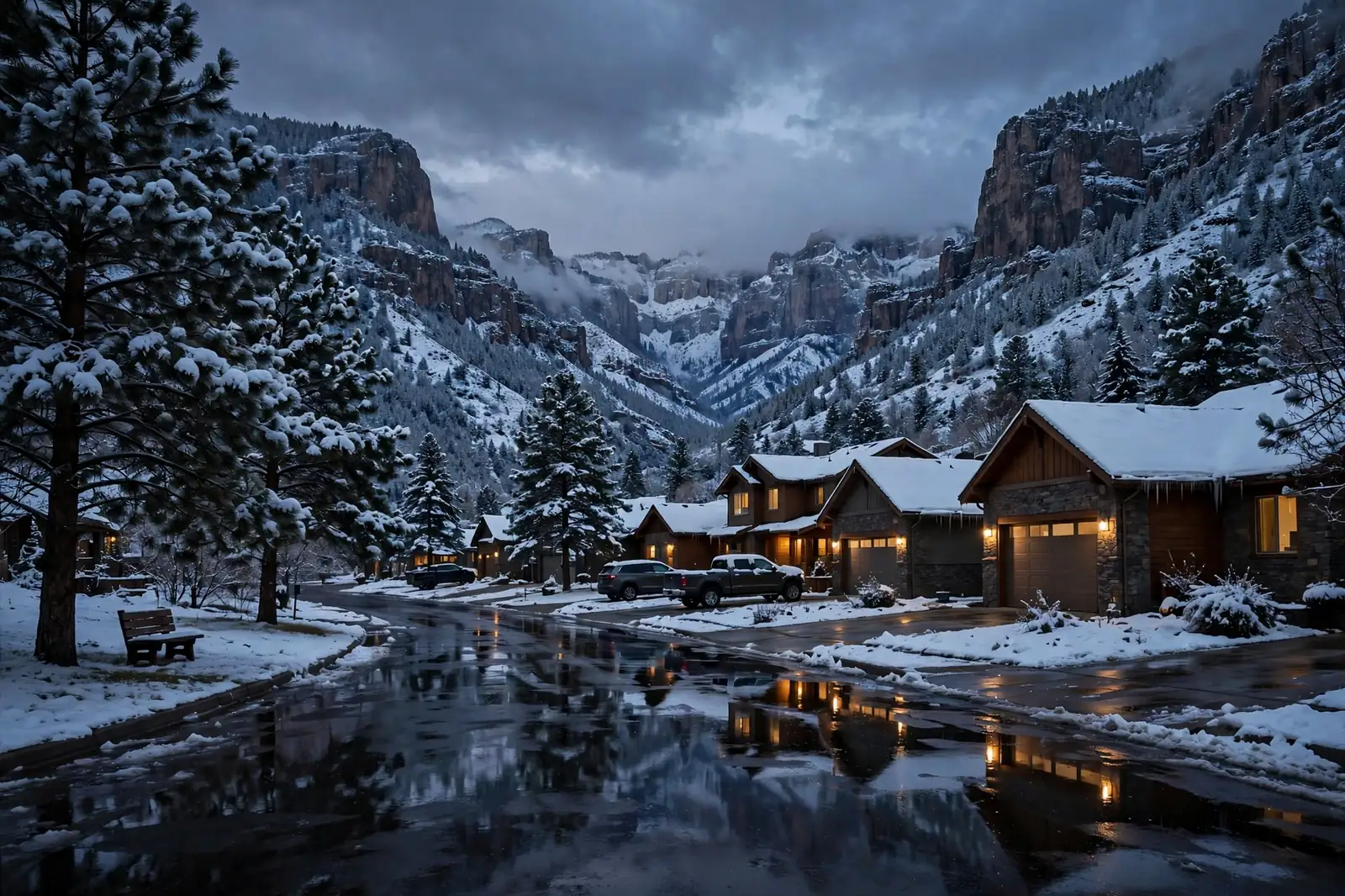
Homes on the benches below Big and Little Cottonwood Canyon face water from every direction: snowmelt pushing on basement walls, ice dams on cold roofs, and pipes freezing on long winter nights. Our water damage restoration Cottonwood Heights UT crew is dispatched immediately across 84121 and 84093 to stop the water, dry your home properly and get it back to normal.
24/7 Emergency Line · Serving 84121 & 84093 · Basements, Roofs & Pipes · Daily Moisture Readings
Why do Cottonwood Heights basements take on water during spring runoff?
Homes below Big and Little Cottonwood canyons sit in snowmelt's path, so soaked soil pushes groundwater against 1960s and 1970s basement walls every spring.
Cottonwood Heights sits on sloping ground between the canyon mouths and the valley floor. When the Wasatch snowpack melts, water moves downhill through the soil, not just over it. Lots on the benches and along the slopes see that water press against foundation walls, find cracks and wall joints, and seep into finished basements. Older homes, many built in the 1960s and 1970s with fully finished lower levels, carry paneling, carpet and drywall right against the concrete, so seepage can spread well before anyone sees it. Add window wells that fill with meltwater and you have the city's most common spring call.
Cottonwood Heights Water Risks, Season by Season
Water damage here follows the seasons more closely than in most of the valley.
Winter: Frozen Pipes and Ice Dams
Cottonwood Heights sits higher and closer to the mountains than much of the Salt Lake Valley, so cold nights hit hard. Pipes in rim joists, garages and outside walls freeze and split, and hose bibs left connected burst inside the wall. Heavy snow on roofs, combined with attic heat, builds ice dams at the eaves. Meltwater backs up under shingles and stains ceilings along exterior walls. An ice dam roof leak often shows up during the first sunny days after a storm.
Spring: Snowmelt and Groundwater
Runoff from Big and Little Cottonwood canyons saturates the ground, and groundwater basement seepage peaks from about April through June. Snowmelt basement flooding usually comes through wall joints, slab cracks and window wells, sometimes over the whole floor at once.
Summer: Cloudbursts and Swamp Coolers
Short, heavy storms send water down sloped streets and driveways toward garages and window wells. Older homes with rooftop swamp coolers see overflows from stuck float valves that soak attics and ceilings.
Fall: Shutdown Season
The first hard freeze arrives early on the benches. Swamp coolers, sprinkler systems and outside faucets that aren't drained in time crack and leak once the weather warms.
Flooded Basement Cottonwood Heights Homes: What We Do
A flooded basement Cottonwood Heights homeowners call about is usually a finished space. Our approach:
- Find the source: groundwater, a window well, a water heater or a pipe.
- Pump out and extract standing water and water in carpet and pad.
- Map the moisture under flooring, behind paneling and inside walls.
- Remove only what can't be dried, such as soaked pad, insulation or swollen baseboards.
- Dry with air movers and dehumidifiers until readings match dry areas of the home.
- Clean, treat and rebuild.
If groundwater keeps coming back, we show you which walls took on water so a waterproofing contractor knows where to start. Basement Flooding Cleanup
Burst Pipe Repair Cottonwood Heights: Winter Damage
For burst pipe repair Cottonwood Heights homes need, the plumber fixes the pipe and our crew handles the water damage around it. Pipes here freeze most often in:
- Rim joists and cantilevered floors in split-levels.
- Garage walls and ceilings over finished rooms.
- Exterior bathroom and kitchen walls.
- Hose bibs left connected to hoses.
- Crawl space sections under additions.
Water from a split line runs inside walls and ceilings, so thermal imaging and moisture meters guide where to open and dry. Burst Pipe Water Damage
Our Water Damage Services in Cottonwood Heights
- Emergency Water Extraction in Cottonwood Heights: standing water pumped out of basements, kitchens and offices. Emergency Water Extraction
- Basement Flooding Cleanup in Cottonwood Heights: groundwater, window well and plumbing floods in finished basements.
- Window Well Flooding Cleanup in Cottonwood Heights: meltwater and storm water pouring into basement bedrooms. Window Well Flooding
- Burst & Frozen Pipe Cleanup in Cottonwood Heights: inside-wall drying after winter freezes.
- Ceiling & Ice Dam Leak Repair in Cottonwood Heights: stains, sagging drywall and wet insulation along exterior walls. Ceiling Water Damage
- Sewage Backup Cleanup in Cottonwood Heights: Category 3 cleanup from floor drains and toilets. Sewage Backup Cleanup
- Water Heater & Appliance Leak Cleanup in Cottonwood Heights: basement utility rooms, laundry rooms and kitchens.
- Swamp Cooler Leak Repair in Cottonwood Heights: attic and ceiling drying after cooler overflows.
- Hardwood Floor & Cabinet Drying in Cottonwood Heights: in-place drying to save floors and cabinets.
- Crawl Space Water Damage in Cottonwood Heights: additions and older homes with crawl space sections.
- Condo & Townhome Water Damage in Cottonwood Heights: unit-to-unit leaks with separate records.
- Commercial Water Damage in Cottonwood Heights: offices and shops along Fort Union Blvd and the business parks.
- Storm & Flash Flood Cleanup in Cottonwood Heights: runoff into garages, stairwells and window wells.
- Mold Remediation in Cottonwood Heights: containment and removal after leaks. Mold Remediation
- Water Leak Detection in Cottonwood Heights: thermal imaging and moisture mapping.
- Water Damage Repair in Cottonwood Heights: drywall, texture, flooring and trim rebuilt. Water Damage Repair
Neighborhoods and Areas We Cover
We serve all of Cottonwood Heights in ZIP 84121 and 84093, including homes near:
- Fort Union Blvd and the east bench.
- Wasatch Blvd and the canyon mouths.
- Bengal Blvd and the Brighton High School area.
- Butler and the neighborhoods around the Cottonwood Heights Recreation Center.
- Big Cottonwood Creek and the streets along it.
- The I-215 corridor and its office parks.
Protecting a Cottonwood Heights Home From Water
| Risk | Simple step | When |
|---|---|---|
| Ice dams | Add attic insulation, seal ceiling lights, rake snow off roof edges | Before and during winter |
| Frozen pipes | Disconnect hoses, insulate rim joists and garage lines | Before the first hard freeze |
| Snowmelt seepage | Extend downspouts, slope soil away, keep window well drains clear | Fall and early spring |
| Window wells | Install clear covers | Before winter |
| Swamp coolers | Shut off water and drain the cooler | Early October |
| Water heaters | Check age and add a drain pan | Any time |
Cottonwood Heights Homes and Where They Leak
1960s and 1970s Ramblers and Split-Levels
Much of Cottonwood Heights was built in this era, with fully finished basements, window wells and original supply lines in many homes. Common calls: groundwater seepage, water heater failures in basement utility rooms, and frozen pipes in rim joists and cantilevered floors.
Bench Homes and Walkouts
Homes on the slopes near Wasatch Blvd and the canyon mouths often have walkout basements and lower levels set into the hillside. Uphill walls take the most groundwater pressure, and walkout doors collect runoff from the yard above.
Newer and Remodeled Homes
Newer builds and major remodels add upstairs laundry rooms, large primary bathrooms and engineered hardwood. A washer hose or shower pan leak upstairs shows up in the kitchen or great room ceiling below.
Condos and Townhomes
Condo and townhome communities across the city deal with unit-to-unit leaks and shared roofs, where ice dams can affect several units at once.
Offices Along I-215 and Fort Union Blvd
Office parks and retail centers near I-215 and along Fort Union Blvd see sprinkler leaks, restroom overflows and roof drain backups that need after-hours drying.
What to Do First When Water Hits Your Cottonwood Heights Home
- Shut off the main water valve, usually in the basement or utility room.
- Turn off power to wet rooms if the panel is safe to reach.
- Lift furniture and move rugs, electronics and boxes to a dry room.
- For ice dam leaks, put buckets under drips and keep people out from under sagging ceilings.
- For window wells, lower the water from outside if it's safe; never break the glass.
- Take photos of everything before cleanup starts.
- Call (385) 337-3560 so a crew is dispatched while you work.
Why Fast Drying Matters More in Cottonwood Heights
Cold basements and long winters slow natural drying. Concrete walls and slabs stay cool, so water in carpet pad and the bottom of drywall doesn't evaporate on its own the way it might in a warm room. Without dehumidifiers and air movers, a basement here can stay wet for weeks, which gives mold plenty of time to start. Professional drying with daily moisture readings keeps the job on track and tells you exactly when the space is truly dry.
What Water Damage Restoration Cottonwood Heights UT Costs
General ranges for planning:
- One room, clean water: about $1,000 to $4,500
- Finished basement flooding: about $2,500 to $9,000
- Ceiling and ice dam repairs: about $600 to $3,500
- Sewage cleanup: about $3,000 to $12,000
Cost depends on size, water category, how long it sat, finishes involved and drying time. With insurance coverage, you usually pay only your deductible.
Cottonwood Heights Water Damage FAQ
Does homeowners insurance cover groundwater seepage in Cottonwood Heights?
Often not. Seepage and surface water are commonly excluded, while sudden plumbing failures are usually covered. Our records help your adjuster decide.
How do I stop ice dams on a bench home?
Keep the attic cold with more insulation and air sealing, keep gutters clear, and remove snow from the roof edge from the ground with a roof rake.
How fast can a crew reach 84121?
A crew is dispatched immediately after your call. Travel time depends on where you are and road conditions on Fort Union Blvd, I-215 and Wasatch Blvd.
Why does my basement flood every spring?
Usually groundwater from snowmelt. Drainage outside, sealing and sometimes a sump system can help.
Do you serve condos and businesses in Cottonwood Heights?
Yes. We handle condos, townhomes, offices and shops across 84121 and 84093.
Water in Your Cottonwood Heights Home? Call Now
Whether it's a spring seep, a winter freeze or an ice dam leak, the sooner drying starts, the less you lose. For water damage restoration Cottonwood Heights UT homeowners and businesses can reach any hour, from a flooded basement Cottonwood Heights family just found to burst pipe repair Cottonwood Heights homes need tonight, call now. A crew is dispatched immediately.